Business
Flint Bishop Airport Lands $4.6M Federal Grant: What 40 Acres of New Development Could Mean for Local Jobs and Economic Growth
By Staff · July 17, 2026
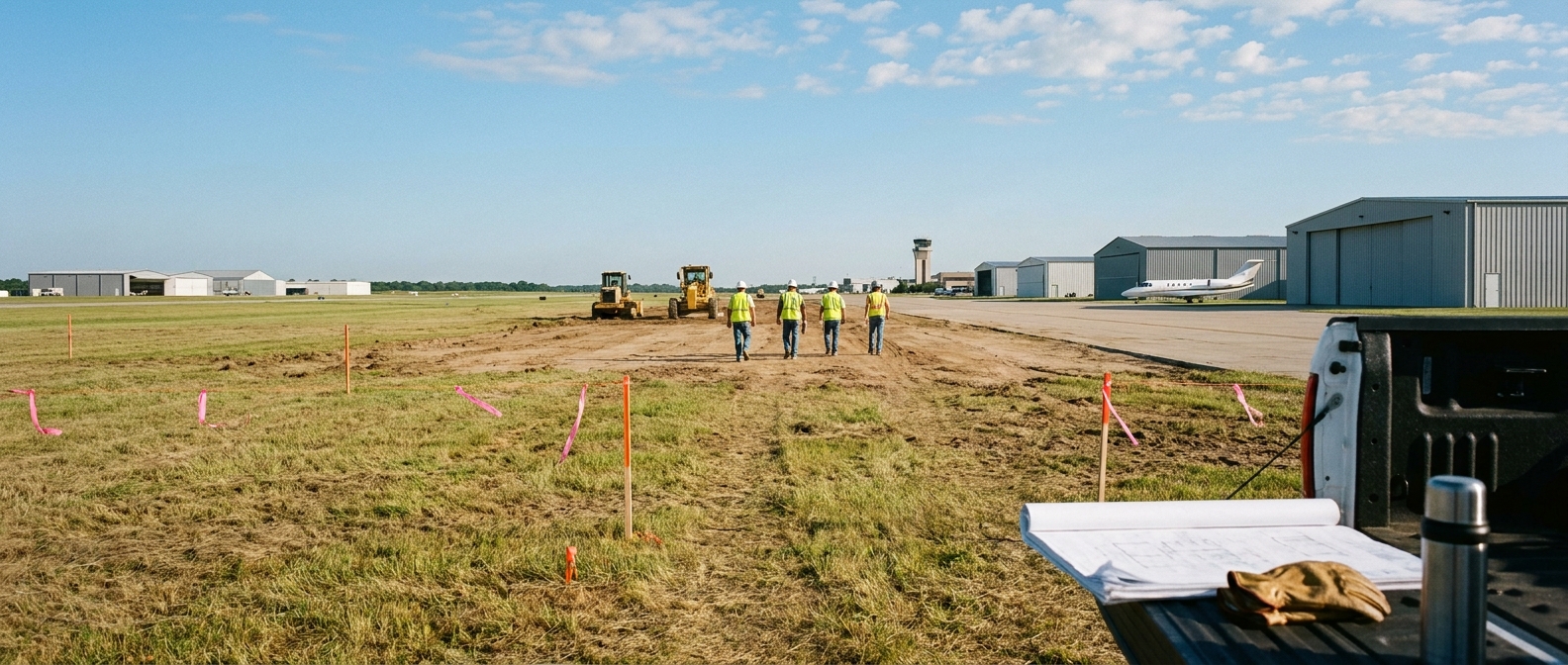
Flint Bishop International Airport has secured $4,600,361 in federal funding for infrastructure meant to open 40 acres for future hangar development—but the grant comes with no public commitment that Flint and Genesee County residents will get the jobs it creates.
The money will pay for a 1,200-foot taxi lane and a 6,000-foot service road, projects airport leaders say will expand airfield access and capacity. U.S. Rep. Kristen McDonald Rivet announced the Fiscal Year 2026 Federal Aviation Administration Airport Infrastructure Grant on July 8. McDonald Rivet represents Michigan's 8th Congressional District, which includes almost all of Genesee County.
The 40 acres of aeronautical property, earmarked for hangars serving corporate and larger aircraft, have been in Bishop's master plan for five years. Construction on the taxi lane and service road is scheduled to begin by the end of July.
"Bishop must be a hub for commerce, not just leisure travel," U.S. Rep. Kristen McDonald Rivet said.
For Genesee County families who have watched infrastructure investments enrich suburban corridors while bypassing Flint workers, the central question is whether this federal money includes binding commitments to hire locally and create living-wage jobs—or whether the new hangars will simply serve visiting corporate jets.
Federal construction contracts above $2,000 funded through the Airport Improvement Program must include applicable U.S. Department of Labor minimum wage rates under 49 CFR Part 18.36. Those requirements address wages but do not require contractors to hire workers from Flint or Genesee County, do not mandate living wages, and do not track whether workers reside in the county. The grant information released so far does not spell out local-hiring goals or contractor-selection criteria tied to community employment.
Airport officials say companies have already expressed interest in aircraft storage and aviation space at the site.
"There'll be jobs in hangars. There'll be jobs for aircraft maintenance. You're going to have aerospace jobs," Nino Sapone, chief executive officer of Flint Bishop International Airport, said.
"The project will open forty acres of prime aeronautical property for development," Nino Sapone said.
"It's going to have a domino effect throughout the community. We're going to get business here, we're going to get tax dollars. It's going to have a positive effect on the Flint area," Nino Sapone said.
That is the airport's case: make the land accessible, attract tenants, and generate investment and tax revenue. But no formal economic-impact study has been published projecting job totals for the 40-acre development, and neither airport leadership nor McDonald Rivet's office has disclosed binding local-hiring commitments, wage thresholds for future hangar tenants, or a public system for tracking how many construction workers and eventual hangar employees live in Flint or Genesee County.
Those omissions carry weight in a region that has heard redevelopment promises before.
GM employment in the Flint area peaked at over 80,000 in 1978, creating a strong middle class built on manufacturing jobs; it has since collapsed to barely 8,000 today. From 1940 to 1960, GM built eight new industrial complexes in the suburbs while Flint supplied roads, water and sewer hookups that subsidized expansion without benefiting city residents. The city later backed redevelopment efforts in the 1970s and 1980s, including AutoWorld and Water Street Festival Marketplace, through tax abatements and land clearing, but those projects did not reverse Flint's economic decline.
Bishop has delivered one measurable aviation-employment success. Allegiant Air opened an operational base at the airport in November 2021, creating 88 high-wage jobs for pilots, flight attendants and maintenance technicians. That base shows aviation infrastructure can produce local employment when specific job commitments are documented and tracked—a model the proposed 40-acre hangar development has not yet replicated.
As work begins by the end of July, the first tests will be straightforward: Who wins the general contract? How many workers are hired? And how many live in Genesee County?
After the 40 acres are ready for tenants, the larger questions follow: Who leases the property, how many jobs they create, what those jobs pay, and how many go to Genesee County residents. McDonald Rivet, who serves on the House Transportation Committee, and Sapone will face pressure to make those results public rather than ask residents to accept the promised economic effect on faith.
Bishop received another federal grant in June 2025 for terminal roof and gutter reconstruction and replacement of terminal directional signage, adding to the federal investment at the airport. For this 40-acre hangar development, however, the measure of success will not be the new taxi lane or service road alone, but whether the airport can show that the work and the tenants it enables produce real jobs for Flint and Genesee County residents.